
Openings
- Chess Atlas Subsections
- VOL. I • Chess HistoryFrom Chaturanga to Neural Engines
- VOL. II • Classic ChessPieces, Notation & Rules
- VOL. III • Legendary PlayersPantheon of Chess Immortals
- VOL. IV • Great GamesInteractive game studies
- VOL. V • OpeningsOriginal CAISSORA Opening Articles
- VOL. VI • Tactics & StrategyForks, Pins & Board Geometry
Bird Opening
The Dutch with an extra move
- Sharp play
White begins with f2-f4. The move takes control of e5 at once and prepares play on the kingside. It is the Dutch Defence in White's hands: the same skeleton, one move ahead. People choose it because there is little theory and Black has to think for himself. The price is one weakened point: White's own kingside is slightly loosened.
7…Nbd7
Moves
(14 plies • 7 moves)The d7 knight also aims at e5. Black disputes the key square. Both kings are still in the centre, and both sides follow their plans.
- 1–7moves
- 1.
- 2.
- 3.
- 4.
- 5.
- 6.
- 7.
Defining move
1.f4 — the f-pawn instead of e or d
The move that makes this the Bird Opening
The f4 pawn holds e5 and prepares a knight on e5 and the advance f4-f5. There is a price: the e1-h4 diagonal and the e3 square become more vulnerable, and the king has less cover. White accepts the risk for a game in which Black must find his own way.
Tabiya
Bird with the queen's bishop fianchetto
White has built f4, e3 and b3 and put the bishops on b2 and d3. Black has answered with a Queen's Indian type of set-up: d5, e6, b6, bishops on e7 and b7. Neither king has castled yet. White wants a knight on e5 and an attack on the kingside. Black wants to dispute e5 and get play with …c5 and …Ne4.
The centre
A fight for the e5 squareWhite has pawns on f4, e3 and b3, with the d-pawn still at home. Black has d5, e6 and b6. White's weak spots are the e1-h4 and a7-g1 diagonals and the e4 square, which no pawn covers.
Key squarese5e4f4
Outposts
- e5White's knight
- e4The black knight's square
Thematic breaks
- Ne5White
The jump Ne5
Take the central square that the f4 pawn and the b2 bishop guard.
What follows: A knight on e5 aims at Black's kingside. Black usually trades it off, but then White gets a strong bishop for the attack.
- f5White
The f4-f5 advance
Strike at the e6 pawn and open the f-file for the rook.
What follows: If the strike works, White gets open lines against the king. If not, the pawn is left without support.
- c5Black
The …c7-c5 strike
Hit the centre and open the game against the b2 and d3 bishops.
What follows: Black gains space and opens a road for the queen and rook, but must watch the bishop aimed at h7.
White’s plan
- Hold e5 with the f4 pawn and the b2 bishop, then put a knight there.
- Develop, castle and bring a knight round via e2 and g3.
- Attack the kingside: Qe2, Nh5 and sacrifices on h7 while the black king is there.
Black’s plan
- Take the centre with d5 and e6 and dispute e5 with the d7 knight.
- Strike with …c5 and put a knight on e4.
- Use the weakened diagonals around White's king and trade off the knight on e5 in time.
History
The opening is named after the Englishman Henry Bird, who played 1.f4 in the nineteenth century. In the twentieth, Bent Larsen came back to it. A famous game with it is Lasker against Bauer, Amsterdam 1889: it began with f4, e3, b3 and Bb2 just as in this study, and ended with a double bishop sacrifice on h7 and g7.
Famous games
Lasker – Bauer, Amsterdam 1889 (1889)Legends who played it
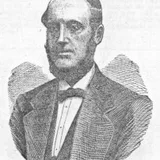 Henry Birdas White · Named after the player
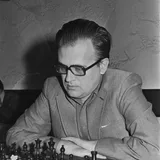 Bent Larsenas White · Signature opening
Lines below
- A02Bird Opening: Batavo-Polish Attack
- A02Bird Opening: Double Duck Formation
- A02Bird Opening: From's Gambit5 lines
- A02Bird Opening: Hobbs Gambit
- A02Bird Opening: Hobbs-Zilbermints Gambit
- A02Bird Opening: Horsefly Defense
- A02Bird Opening: Lasker Gambit
- A02Bird Opening: Mujannah
- A02Bird Opening: Myers Defense
- A02Bird Opening: Platz Gambit
- A02Bird Opening: Schlechter Gambit
- A02Bird Opening: Siegener Gambit
- A02Bird Opening: Swiss Gambit
- A02Bird Opening: Wagner-Zwitersch Gambit
- A03Bird Opening: Dutch Variation3 lines
- A03Bird Opening: Lasker Variation
- A03Bird Opening: Sturm Gambit
- A03Bird Opening: Thomas Gambit
- A03Bird Opening: Williams Gambit2 lines
- A03Bird Opening: Williams-Zilbermints Gambit