
Openings
- Chess Atlas Subsections
- VOL. I • Chess HistoryFrom Chaturanga to Neural Engines
- VOL. II • Classic ChessPieces, Notation & Rules
- VOL. III • Legendary PlayersPantheon of Chess Immortals
- VOL. IV • Great GamesInteractive game studies
- VOL. V • OpeningsOriginal CAISSORA Opening Articles
- VOL. VI • Tactics & StrategyForks, Pins & Board Geometry
Caro-Kann Defense
The bishop first, the pawn after
- Solid
Black prepares d5 with the c6 pawn and keeps the c8 bishop free. Unlike in the French, the bishop gets out before it is shut in by …e6. The structure is sturdy and free of weaknesses, and Black sooner or later trades White's light-squared bishop and equalises calmly. But calm does not mean passive: in many variations Black plays to win.
7…Nd7
Moves
(14 plies • 7 moves)The d7 knight frees the e-pawn's road and prepares …Ngf6 to avoid pins.
- 1–7moves
- 1.
- 2.
- 3.
- 4.
- 5.
- 6.
- 7.
Defining move
4…Bf5! — the bishop comes out first
The move that sets the Caro–Kann apart from the French
The c6 pawn is not only for d5; it keeps the bishop free. While the bishop is on f5 or g6, it looks towards White's kingside and is not shut in by pawns. After that Black plays …e6 calmly, and the bishop remains good.
Tabiya
The Classical system
The main position of the Caro–Kann. White harries the bishop with the h-pawn, but Black answers …Bh7 and trades on d3. Then comes …e6, and Black has a solid structure and free play. White keeps some extra space and the hope of using it in an attack.
The centre
A sturdy structure with no weaknessesBlack's pawns stand on c6 and e6 once the d-pawn has been exchanged. The structure is firm: no weak squares, and the bishop works from outside the chain.
Key squaresd5e4f5
Outposts
- e4White's knight
- h7The bishop's haven
Thematic breaks
- c5Black
The …c6-c5 strike
Strike at d4 and free the centre.
What follows: If it works, Black equalises without trouble.
- h5White
The h4-h5 advance
Drive the g6 bishop away and win space on the kingside.
What follows: Black must move the bishop to h7 in time, or lose it.
- e5Black
The …e7-e5 break
Take the centre when White has gone too far on the wing.
What follows: One of Black's most modern ideas: the game at once becomes sharper.
White’s plan
- Use the extra space: Ng3, h4-h5.
- Develop and castle, often long.
- Do not let Black trade the light-squared bishops for free.
Black’s plan
- Trade the light-squared bishops and solidify e6.
- Free the game with …c5.
- Play for a win with the modern …e5 or a counterstrike on the wing.
History
The defence is named after the Englishman Horatio Caro and the Austrian Marcus Kann, who analysed it in the nineteenth century. It was taken seriously in the twentieth, when world champions started to play it: Capablanca, Botvinnik, Smyslov and Karpov.
Famous games
Réti – Tartakower, Vienna 1910 (1910)Legends who played it

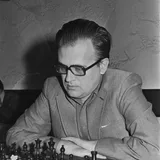
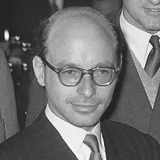
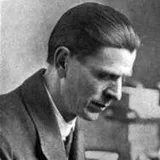
- HHoratio Caroas Black · Named after the player
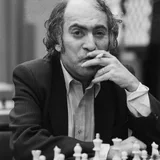

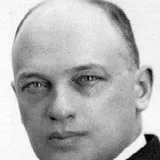
- Anatoly Karpovas Black · Signature opening
- Bent Larsenas Black · Signature opening
- David Bronsteinas Black · Signature opening
 Ding Lirenas Black · Signature opening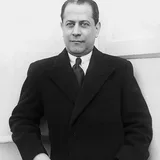
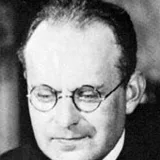 Aaron Nimzovichas Black · In the repertoire
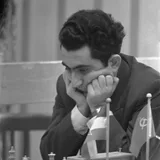 Tigran Petrosianas Black · In the repertoire
 Viktor Korchnoias Black · In the repertoire
 Viswanathan Anandas Black · In the repertoire