
Openings
- Chess Atlas Subsections
- VOL. I • Chess HistoryFrom Chaturanga to Neural Engines
- VOL. II • Classic ChessPieces, Notation & Rules
- VOL. III • Legendary PlayersPantheon of Chess Immortals
- VOL. IV • Great GamesInteractive game studies
- VOL. V • OpeningsOriginal CAISSORA Opening Articles
- VOL. VI • Tactics & StrategyForks, Pins & Board Geometry
Old Indian Defense
An Indian defence where the bishop stays at home
- Solid
Black answers 1.d4 with 1…d6, then plays …Nf6 and …e5. The king's bishop goes modestly to e7 instead of g7, as it would in the King's Indian. The position is sturdy and closed, but a little passive: White usually has more space. People choose it to sidestep the sharpest anti-King's Indian systems and to get a calm game with little theory.
7…c6
Moves
(14 plies • 7 moves)- 1–7moves
- 1.
- 2.
- 3.
- 4.
- 5.
- 6.
- 7.
Defining move
5…Be7 — the bishop stays at home
The move that sets it apart from the King's Indian
The bishop on e7 shelters the king and holds the centre, but it looks at its own pawns. In return Black need not fear the Sämisch or the Averbakh. The price is less activity and a little less space.
Tabiya
The main position: White has space, Black has a sound wall
White has pawns on c4 and e4 and natural development. Black has the sturdy d6–e5 chain and has castled. The move …c6 prepares …a5, and later perhaps …exd4 or …d5. White tries to squeeze a small but lasting edge from the extra space; Black waits for the moment to strike back.
White’s plan
- Hold the centre with c4 and e4 and develop without hurry.
- Prepare d4-d5, or trade on e5 and play for a small space edge.
- Do not let Black free the game with …d5 or …exd4.
Black’s plan
- Build the d6–e5 chain, bring the bishop to e7 and castle.
- Prepare with …c6 and …a5 and wait for a good moment.
- Strike in the centre with …exd4 or …d5 once White allows it.
History
The variation 3…Bf5 is named after Dawid Janowski, who introduced it in the 1920s.
Legends who played it
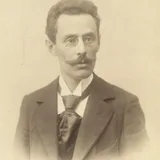
Games in the Atlas
Lines below
- A53Old Indian Defense
- A53Old Indian Defense: Aged Gibbon Gambit
- A53Old Indian Defense: Janowski Variation4 lines
- A54Old Indian Defense: Duz-Khotimirsky Variation
- A54Old Indian Defense: Tartakower-Indian
- A54Old Indian Defense: Two Knights Variation
- A54Old Indian Defense: Ukrainian Variation
- A55Old Indian Defense: Normal Variation
- Old Indian Defense: Czech Variation2 lines