
Openings
- Chess Atlas Subsections
- VOL. I • Chess HistoryFrom Chaturanga to Neural Engines
- VOL. II • Classic ChessPieces, Notation & Rules
- VOL. III • Legendary PlayersPantheon of Chess Immortals
- VOL. IV • Great GamesInteractive game studies
- VOL. V • OpeningsOriginal CAISSORA Opening Articles
- VOL. VI • Tactics & StrategyForks, Pins & Board Geometry
Petrov's Defense
A counterpunch instead of a defence
- Solid
- Symmetry
After 2.Nf3 Black does not defend the e5 pawn but attacks e4 instead. Both sides then trade pawns and reach a symmetrical, very sturdy position. White finds it hard to get a big edge, so the Petrov suits those who want an equal game without needless risk. Still, either side can win: one slip in development is enough.
7…Nc6
Moves
(14 plies • 7 moves)The knight develops and presses on d4. White now chooses between c2-c4, Re1 and Nc3.
- 1–7moves
- 1.
- 2.
- 3.
- 4.
- 5.
- 6.
- 7.
Defining move
2…Nf6! — a counterattack instead of a defence
The move that sets the Petrov apart from the Scotch, Italian and Spanish
In the other open games Black defends e5 with a knight on c6. Here the knight goes to f6 and hits the e4 pawn. White can take on e5, but Black wins the pawn back and the game turns symmetrical. Black does not sit in defence; he answers a blow with a blow.
Tabiya
The Classical variation
The main position of the Petrov: the d4 and d5 pawns face each other, the bishops stand on d3 and e7, and both kings are near castling or already past it. White wants to dislodge the e4 knight with c2-c4 and Re1. Black wants to keep the knight, finish development and trade it on good terms. The structure recalls the Exchange French: there are almost no weak squares, so accuracy in development decides.
The centre
A symmetrical structureThe e-pawns are gone, and the d4 and d5 pawns face each other in the centre. Both sides have a healthy structure. Whoever trades on c4 or d5 at the wrong moment hands the centre to the opponent.
Key squarese4d5d4
Outposts
- e4Black's knight
- d4White's pawn
Thematic breaks
- c4White
The c2-c4 strike
Undermine the d5 pawn that holds up the e4 knight.
What follows: Black must decide whether to take on c4 or hold the centre. Both paths demand accuracy.
- Nb4Black
The …Nc6-b4 jump
Attack the d3 bishop and threaten the c2 square.
What follows: The bishop usually retreats to e2, and Black gains time for castling and development.
- Bg4Black
The …Bc8-g4 pin
Pin the f3 knight, on which the d4 pawn depends.
What follows: White has to look after the centre, and the c2-c4 plan is delayed.
White’s plan
- Dislodge the e4 knight with c2-c4 and Re1.
- Guard the d4 pawn and take no hurry: the better development gives White a small lead in time.
- Develop, castle and use any slip by Black in development.
Black’s plan
- Hold the e4 knight with the d5 pawn and finish development.
- Trade the knights and relieve the pressure, to equalise without risk.
- Play actively: …Nb4 against the d3 bishop and …Bg4 against the f3 knight.
History
The opening is named after Alexander Petrov, a Russian master of the nineteenth century who analysed it together with Carl Jaenisch. It became especially popular in the middle of that century. Later it was chosen by world champions Tigran Petrosian and Vladimir Kramnik, and more recently by Fabiano Caruana, who showed that the defence has sharper ideas than its calm reputation suggests.
Legends who played it
- AAlexander Petrovas Black · Named after the player
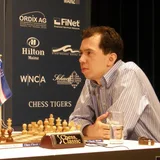 Rustam Kasimdzhanovas Black · Signature opening
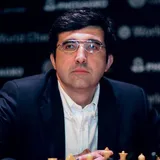 Vladimir Kramnikas Black · Signature opening
Games in the Atlas
No games in the Atlas yet
Lines below
- C42Petrov's Defense
- C42Petrov's Defense
- C42Petrov's Defense
- C42Petrov's Defense
- C42Petrov's Defense: Classical Attack16 lines
- C42Petrov's Defense: Cochrane Gambit3 lines
- C42Petrov's Defense: Cozio Attack
- C42Petrov's Defense: Damiano Variation2 lines
- C42Petrov's Defense: French Attack
- C42Petrov's Defense: Italian Variation
- C42Petrov's Defense: Karklins-Martinovsky Variation
- C42Petrov's Defense: Kaufmann Attack
- C42Petrov's Defense: Millennium Attack
- C42Petrov's Defense: Moody Gambit
- C42Petrov's Defense: Nimzowitsch Attack
- C42Petrov's Defense: Paulsen Attack
- C42Petrov's Defense: Stafford Gambit
- C42Petrov's Defense: Stafford Gambit Accepted3 lines
- C42Petrov's Defense: Three Knights Game
- C43Petrov's Defense: Modern Attack10 lines