
Openings
- Chess Atlas Subsections
- VOL. I • Chess HistoryFrom Chaturanga to Neural Engines
- VOL. II • Classic ChessPieces, Notation & Rules
- VOL. III • Legendary PlayersPantheon of Chess Immortals
- VOL. IV • Great GamesInteractive game studies
- VOL. V • OpeningsOriginal CAISSORA Opening Articles
- VOL. VI • Tactics & StrategyForks, Pins & Board Geometry
Sicilian Defense
Answer not with a mirror, but with a strike from the side
- Sharp play
- Asymmetry
5.Nc3
Moves
(9 plies • 5 moves)The knight covers e4 and completes development. Now Black reaches a fork: …a6, …g6, …e6 or …Nc6.
- 1–5moves
- 1.
- 2.
- 3.
- 4.
- 5.
Defining move
1…c5! — a strike from the side
The move that sets the Sicilian apart from every other answer to 1.e4
After 1…e5 Black builds the same chain as White and the game mirrors itself. The c5 pawn breaks the symmetry: it hits d4, prepares to trade for a central pawn and opens the c-file. White cannot calmly build a big centre, and Black gets a plan of its own.
Tabiya
The Open Sicilian
The position from which the whole Sicilian theory grows. White has a knight on d4 and a pawn on e4; Black has a pawn on d6 and a knight on f6. Now Black chooses the character of the game: …a6 leads to the Najdorf, …g6 to the Dragon, …e6 to the Scheveningen, …Nc6 to the Classical system. Four moves, four entirely different worlds.
The centre
A central pawn against a wing pawnWhite keeps the e4 pawn, Black the d6 pawn. Black gets the central majority (d and e pawns against one), White the queenside majority (a, b, c against a, b). So White usually attacks on the kingside while Black presses along the c-file.
Key squaresd4d5e5
Outposts
- d4White's key knight
- d5The hole in the centre
Thematic breaks
- d5Black
The freeing strike …d6-d5
Trade off the e4 pawn and take away White's central edge.
What follows: The centre opens and Black equalises. That is why White does everything to prevent it, or attacks first.
- g4White
The kingside pawn storm
Drive Black's pieces from the kingside and open lines towards the king.
What follows: The game becomes a race: while White storms, Black must create counterplay on the c-file in time.
- b5Black
The …b7-b5 thrust
Push White's pieces back, win space and attack if the White king has gone to the queenside.
What follows: Both kings come under fire, and the more accurate calculator wins.
White’s plan
- Develop quickly: Be3, f3 or f4, Qd2, then castle, often long.
- Attack on the kingside with the f, g and h pawns.
- Keep Black from the freeing …d5, and strike first when it is being prepared.
Black’s plan
- Use the c-file: put a rook on c8 and press on c2.
- Counterattack on the queenside with …a6, …b5, …Qc7.
- Choose the structure to taste: …e5 with a hole on d5, …e6 with a flexible chain, or …g6 with a bishop on the long diagonal.
History
The Italian Giulio Polerio left the first written analysis of the move in the late sixteenth century. The Sicilian was taken up seriously in the La Bourdonnais–McDonnell matches of 1834. It found a second life in the middle of the twentieth century, when Soviet masters, followed by the Argentine Miguel Najdorf, Bobby Fischer and Garry Kasparov, made it Black's main weapon against 1.e4. In 1985 Kasparov won the last game of his match with it and became world champion.
Article
Sicilian DefenseLegends who played it
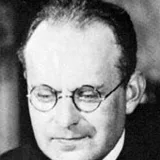
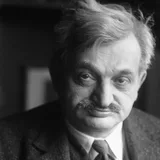
- EEvgeny Sveshnikovas Black · Named after the player
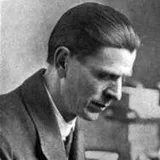
- GGrigory Levenfishas White · Named after the player
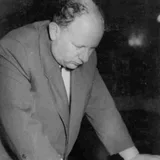
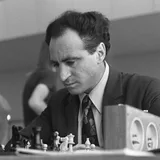 Lev Polugaevskyas Black · Named after the player
- M
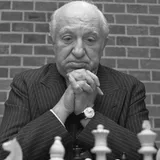
- N
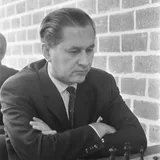
- RRashid Nezhmetdinovas White · Named after the player
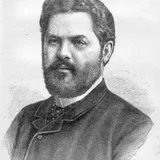
 Adolf Anderssenas Black · Signature opening
 Alexander Khalifmanas Black · Signature opening
 Anatoly Karpovwith both colours · Signature opening
 Bent Larsenwith both colours · Signature opening
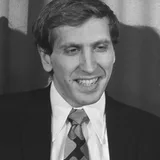 Bobby Fischerwith both colours · Signature opening
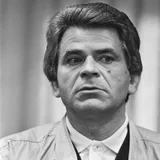 Boris Spasskywith both colours · Signature opening
- Garry Kasparovwith both colours · Signature opening
 Hou Yifanas Black · Signature opening
 Mikhail Botvinnikas Black · Signature opening
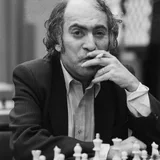 Mikhail Talwith both colours · Signature opening
 Ruslan Ponomariovas Black · Signature opening
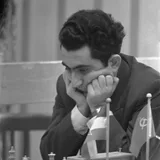 Tigran Petrosianas Black · Signature opening
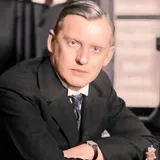 Alexander Alekhinewith both colours · In the repertoire
 David Bronsteinwith both colours · In the repertoire
- Emanuel Laskerwith both colours · In the repertoire
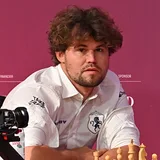 Magnus Carlsenas Black · In the repertoire
 Max Euweas Black · In the repertoire
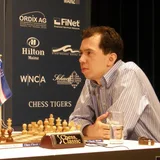 Rustam Kasimdzhanovas Black · In the repertoire
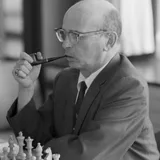 Samuel Reshevskyas Black · In the repertoire
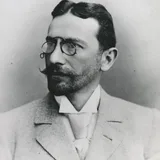 Siegbert Tarraschas Black · In the repertoire
 Vasily Smyslovas Black · In the repertoire
- Veselin Topalovas Black · In the repertoire
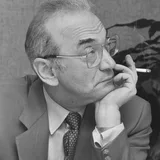 Viktor Korchnoias Black · In the repertoire
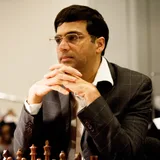 Viswanathan Anandas Black · In the repertoire
Games in the Atlas
- Carlsen – Karjakin, World Championship 2016, rapid tie-break game 4Magnus Carlsen – Sergey Karjakin · 2016 · 1-0
- Karpov – Kasparov, World Championship 1985, game 16Anatoly Karpov – Garry Kasparov · 1985 · 0-1
- Karpov – Kasparov, World Championship 1985, game 24Anatoly Karpov – Garry Kasparov · 1985 · 0-1
Lines below
- B20Sicilian Defense: Amazon Attack
- B20Sicilian Defense: Big Clamp Formation
- B20Sicilian Defense: Bowdler Attack
- B20Sicilian Defense: Brick Variation
- B20Sicilian Defense: Czerniak Attack2 lines
- B20Sicilian Defense: Gloria Variation
- B20Sicilian Defense: Grob Variation
- B20Sicilian Defense: Keres Variation
- B20Sicilian Defense: King David's Opening
- B20Sicilian Defense: Kronberger Variation2 lines
- B20Sicilian Defense: Lasker-Dunne Attack
- B20Sicilian Defense: Mengarini Variation
- B20Sicilian Defense: Staunton-Cochrane Variation
- B20Sicilian Defense: Wing Gambit9 lines
- B21Sicilian Defense: Coles Sicilian Gambit
- B21Sicilian Defense: Halasz Gambit
- B21Sicilian Defense: McDonnell Attack3 lines
- B21Sicilian Defense: Morphy Gambit2 lines
- B21Sicilian Defense: Smith-Morra Gambit2 lines
- B21Sicilian Defense: Smith-Morra Gambit Accepted21 lines
- B22Sicilian Defense: Alapin Variation13 lines
- B22Sicilian Defense: Delayed Alapin Variation6 lines
- B22Sicilian Defense: Heidenfeld Variation
- B23Sicilian Defense: Closed23 lines
- B23Sicilian Defense: Grand Prix Attack2 lines
- B27Sicilian Defense
- B27Sicilian Defense: Acton Extension
- B27Sicilian Defense: Brussels Gambit
- B27Sicilian Defense: Bücker Variation
- B27Sicilian Defense: Double-Dutch Gambit
- B27Sicilian Defense: Frederico Variation
- B27Sicilian Defense: Hyperaccelerated Dragon2 lines
- B27Sicilian Defense: Hyperaccelerated Pterodactyl2 lines
- B27Sicilian Defense: Jalalabad Variation
- B27Sicilian Defense: Katalimov Variation
- B27Sicilian Defense: Mongoose Variation
- B27Sicilian Defense: Polish Gambit
- B27Sicilian Defense: Quinteros Variation
- B28Sicilian Defense: O'Kelly Variation21 lines
- B29Sicilian Defense: Nimzowitsch Variation5 lines
- B30Sicilian Defense: Nyezhmetdinov-Rossolimo Attack8 lines
- B30Sicilian Defense: Old Sicilian
- B30Sicilian Defense: Portsmouth Gambit
- B32Sicilian Defense: Accelerated Dragon10 lines
- B32Sicilian Defense: Flohr Variation
- B32Sicilian Defense: Franco-Sicilian Variation
- B32Sicilian Defense: Godiva Variation
- B32Sicilian Defense: Kalashnikov Variation
- B32Sicilian Defense: Löwenthal Variation
- B32Sicilian Defense: Nimzo-American Variation