
Openings
- Chess Atlas Subsections
- VOL. I • Chess HistoryFrom Chaturanga to Neural Engines
- VOL. II • Classic ChessPieces, Notation & Rules
- VOL. III • Legendary PlayersPantheon of Chess Immortals
- VOL. IV • Great GamesInteractive game studies
- VOL. V • OpeningsOriginal CAISSORA Opening Articles
- VOL. VI • Tactics & StrategyForks, Pins & Board Geometry
Philidor Defense
A fortress around e5
- Solid
The Philidor Defense begins 1.e4 e5 2.Nf3 d6, named after the 18th-century French chess master François-André Danican Philidor, who championed 2...d6 as a sturdier reply than the more common 2...Nc6 (the same move had already been suggested two centuries earlier, in 1561, by Ruy López de Segura as a response to Pedro Damiano's theories).
7…c6
Moves
(14 plies • 7 moves)The c6 pawn holds e5 firmly and frees the queen. Black has built a fortress.
- 1–7moves
- 1.
- 2.
- 3.
- 4.
- 5.
- 6.
- 7.
Defining move
2…d6! — defence with a pawn
The move that sets the Philidor apart from the usual 2…Nc6
Instead of defending e5 with a knight, Black defends it with a pawn. The knight stays free for more important tasks, and the position is compact. The price is passivity: the c8 bishop is shut in and Black has less space.
Tabiya
The Hanham position
A typical Philidor position: Black has a fortress of d6, c6 and e5 pawns and d7 and f6 knights. White presses on e5, but breaking the fortress is not easy. The position is closed, so play is unhurried: White regroups, Black waits for a good moment for …exd4 or …d5.
The centre
A closed fortressBlack has the d6–e5 chain and a c6 pawn. White has d4 and e4 and more space.
Key squarese5d4d5
Outposts
- e5The heart of the fortress
- d4The tension square
Thematic breaks
- d5Black
The …d6-d5 strike
Free the game and release the c8 bishop.
What follows: If it works, the fortress becomes an ordinary equal position.
- d5White
The d4-d5 advance
Close the centre and win space.
What follows: The game becomes manoeuvring, and Black must seek counterplay on the wings.
White’s plan
- Press on e5 and hold the centre.
- Regroup without letting Black play the freeing …d5.
- If Black errs, strike at f7 with pieces.
Black’s plan
- Hold e5: …Nbd7, …c6, …Be7.
- Finish development and castle.
- Choose a moment for …exd4 or …d5 to break free.
Famous games
The Opera Game (1858)The Philidor Defense begins 1.e4 e5 2.Nf3 d6, named after the 18th-century French chess master François-André Danican Philidor, who championed 2...d6 as a sturdier reply than the more common 2...Nc6 (the same move had already been suggested two centuries earlier, in 1561, by Ruy López de Segura as a response to Pedro Damiano's theories). Philidor's own plan centered on the pawn break ...f7-f5 to contest White's center, reflecting his broader and highly influential view — expressed in his 1749 treatise — that pawns are 'the soul of chess.' The defense solidly supports Black's e5 pawn while keeping the position compact, but its cautious, largely passive character has kept it out of favor at the top level, even as it has found a modest revival in fast time controls. Its most famous outing came in the 1858 'Opera Game' in Paris, where Paul Morphy demolished the Duke of Brunswick and Count Isouard after they departed from mainline theory with 3...Bg4, producing one of the most celebrated combinations in chess history.
Legends who played it
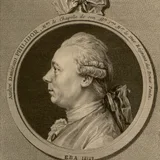 François-André Danican Philidoras Black · Named after the player