
Openings
- Chess Atlas Subsections
- VOL. I • Chess HistoryFrom Chaturanga to Neural Engines
- VOL. II • Classic ChessPieces, Notation & Rules
- VOL. III • Legendary PlayersPantheon of Chess Immortals
- VOL. IV • Great GamesInteractive game studies
- VOL. V • OpeningsOriginal CAISSORA Opening Articles
- VOL. VI • Tactics & StrategyForks, Pins & Board Geometry
Ruy Lopez (Spanish Opening)
Pressure that is in no hurry
- Positional play
- Classical
The Ruy Lopez begins 1.e4 e5 2.Nf3 Nc6 3.Bb5, named after the 16th-century Spanish priest Ruy López de Segura, who analyzed it in an early chess treatise.
9.h3
Moves
(17 plies • 9 moves)The modest h3 stops …Bg4 and gives White time for manoeuvres. From here the main discussion begins: which system will Black choose?
- 1–9moves
- 1.
- 2.
- 3.
- 4.
- 5.
- 6.
- 7.
- 8.
- 9.
Defining move
3.Bb5! — pressure without a threat
The move that makes the game Spanish
The bishop attacks nothing that can be captured: it aims at the knight and, through it, at the e5 pawn. White does not try to win material but creates a weakness that Black must nurse for many moves. That is why the Ruy Lopez is not an attack but a long, patient pressure.
Tabiya
The Closed Spanish tabiya
The main position of the Ruy Lopez and one of the most studied in chess. White builds a c3–d4 centre and usually reroutes a knight via d2–f1–g3. Black chooses how to live on: the knight to a5 (Chigorin), the knight to b8 (Breyer) or the bishop to b7 (Zaitsev). Each leads to a long positional fight.
The centre
A closed centre with energy in reserveBlack holds e5 with d6 and later c6 or c5. White aims for d2-d4, after which the centre either opens or locks for good.
Key squarese5d4b3
Outposts
- e5The pawn it is all about
- b3The bishop's home
Thematic breaks
- d4White
The d2-d4 break
Strike at e5 and either open the game or lock the centre on good terms.
What follows: If Black answers …exd4 the b3 bishop gets a powerful diagonal; if …Nb4 or …c5, a manoeuvring fight begins.
- c5Black
The …c7-c5 counterstrike
Attack d4 and win space on the queenside.
What follows: While White is busy in the centre, Black gets counterplay on the wing.
- d5Black
The Marshall gambit …d7-d5
Give up a pawn for a quick attack on the kingside.
What follows: White has to survive the attack and keep the extra material. Many avoid the gambit in advance with a2-a4.
White’s plan
- Build the centre: c3 and d4, preceded by h3 and Nbd2-f1-g3.
- Keep pressing on e5 and the kingside.
- Keep a2-a4 in reserve against the Marshall.
Black’s plan
- Hold e5 and wait for the right moment for …c5 or …d5.
- Play on the queenside: …b5, …Na5, …c5.
- Prepare an answer to d4 so that …exd4 does not create weaknesses.
History
In 1918 Frank Marshall played the gambit with 8…d5 against Capablanca, and it has borne his name ever since. Capablanca survived the attack and won. In 2000 Vladimir Kramnik chose the Berlin Defence against Kasparov, and Kasparov never managed to crack it.
The Ruy Lopez begins 1.e4 e5 2.Nf3 Nc6 3.Bb5, named after the 16th-century Spanish priest Ruy López de Segura, who analyzed it in an early chess treatise. White's bishop targets the knight defending Black's e5 pawn, applying long-term pressure while White develops quickly and often castles within a few moves. Black has several well-established replies, from the solid Morphy Defense (3...a6) to the sharp Berlin Defense (3...Nf6), which tends to lead to simplified, technically demanding endgames rather than early tactics. The Ruy Lopez has appeared in World Championship play across every era of modern chess, prized for offering rich strategic play without early forced complications.
Legends who played it
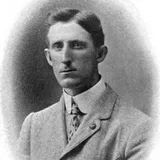
- G
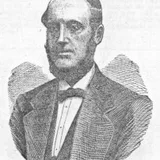
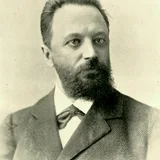
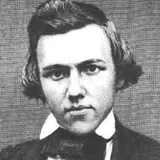
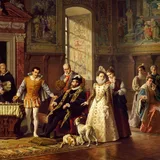 Ruy López de Seguraas White · Named after the player
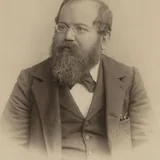
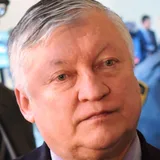 Anatoly Karpovwith both colours · Signature opening
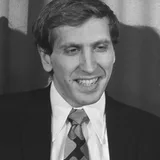 Bobby Fischeras White · Signature opening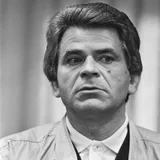
- Boris Spasskywith both colours · Signature opening
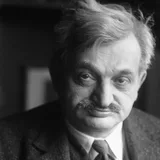 Emanuel Laskerwith both colours · Signature opening
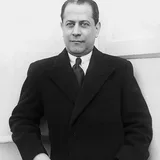 José Raúl Capablancawith both colours · Signature opening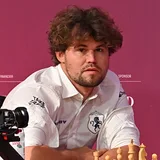
- Magnus Carlsenas White · Signature opening
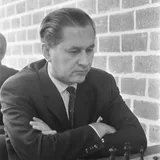 Paul Kereswith both colours · Signature opening
 Ruslan Ponomariovwith both colours · Signature opening
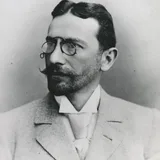 Siegbert Tarraschwith both colours · Signature opening
- Vasily Smyslovwith both colours · Signature opening
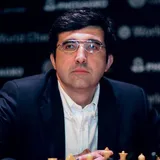
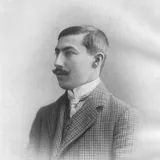 Akiba Rubinsteinas Black · In the repertoire
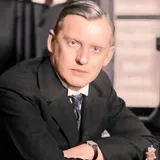 Alexander Alekhinewith both colours · In the repertoire
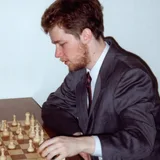 Alexander Khalifmanwith both colours · In the repertoire
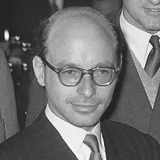 David Bronsteinwith both colours · In the repertoire
 Ding Lirenas Black · In the repertoire
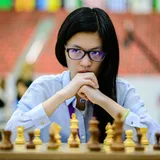 Hou Yifanas White · In the repertoire
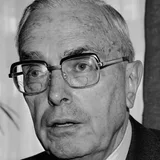 Max Euwewith both colours · In the repertoire
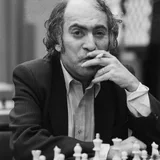 Mikhail Talas White · In the repertoire
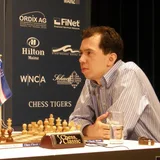 Rustam Kasimdzhanovwith both colours · In the repertoire
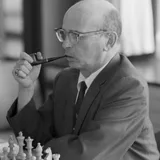 Samuel Reshevskyas Black · In the repertoire
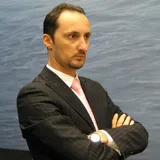 Veselin Topalovas White · In the repertoire
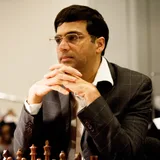 Viswanathan Anandas White · In the repertoire