
Openings
- Chess Atlas Subsections
- VOL. I • Chess HistoryFrom Chaturanga to Neural Engines
- VOL. II • Classic ChessPieces, Notation & Rules
- VOL. III • Legendary PlayersPantheon of Chess Immortals
- VOL. IV • Great GamesInteractive game studies
- VOL. V • OpeningsOriginal CAISSORA Opening Articles
- VOL. VI • Tactics & StrategyForks, Pins & Board Geometry
Dutch Defense
One pawn step, and e4 is in the fist
- Fianchetto
- Sharp play
- Closed centre
Against 1.d4 Black does not mirror the move but plays …f5. The pawn takes charge of e4 and sets a fighting tone at once: Black wants to attack on the kingside, not merely to equalise. The price is real, since the king is left with a loosened diagonal and a soft spot on e6. So the Dutch suits players who accept some discomfort in return for winning chances.
6…d6
Moves
(12 plies • 6 moves)The d6 pawn guards e5 and keeps the …e5 decision for later. This is the classical set-up, not the Stonewall.
- 1–6moves
- 1.
- 2.
- 3.
- 4.
- 5.
- 6.
Defining move
1…f5 — the pawn grabs e4
The move that makes the defence Dutch
Any mirror reply to d4 would be quieter. The f5 pawn cuts across the principle of developing the centre first: it controls e4 and prepares an attack on the kingside. In return the king and the e6 square are loosened, and every inaccurate move risks a blow. That mix draws fighters and puts off the cautious.
Tabiya
The Classical set-up
Both kings are safe. White has a bishop on g2 with pawns on d4 and c4; Black has pawns on f5, e6 and d6 and a bishop on e7. White wants to bring a knight to c3, put the queen on c2 and prepare e4 or d5. Black plans …Qe8 and …Nc6 or …a5, holds e4 with a knight and strikes with …e5 at the right moment. The fight is about e4 and e5.
The centre
A semi-closed centre, a fight over e4 and e5Black has pawns on f5, e6 and d6; White has d4 and c4. The f5 pawn holds e4 and d6 guards e5, but the e6 square and the a2-g8 diagonal stay soft. White's central pawns have not yet moved, so any break changes the whole picture.
Key squarese4e5e6
Outposts
- e4Black's outpost
- e5The contested square
Thematic breaks
- e5Black
The …e6-e5 break
Take the centre and open lines before White can fix d5 or e4.
What follows: If it works, the c8 bishop comes alive and the position is level. If not, e6 becomes a target.
- e4White
The e2-e4 strike
Break Black's grip on e4 and open the game in White's favour.
What follows: Usually prepared by Nc3 and Re1. After the exchange on e4 the e-file opens and Black's weaknesses come into view.
- d5White
The d4-d5 advance
Win space and close the centre, so the c8 bishop is left with nothing to do.
What follows: The structure freezes and the fight moves to the wings. Black gets e5 as a square for a knight.
White’s plan
- Develop harmoniously: Nc3, Qc2, Rd1, or b3 with Bb2.
- Prepare e2-e4 to dislodge Black from e4.
- Use the weaknesses in Black's camp: the e6 square and the a2-g8 diagonal.
Black’s plan
- Keep e4 with a knight and the f5 pawn.
- Build an attack on the kingside: …Qe8, …Qh5, …Ne4.
- Choose the moment for the …e5 break, which frees the c8 bishop.
History
Elias Stein recommended answering d4 with f5 in a book published in The Hague in 1789, which gave the opening its name. In the twentieth century Larsen and others played it with success. Its loudest moment came in 1951, when Botvinnik and Bronstein both played the Dutch in their match for the world title.
Legends who played it
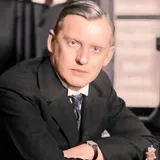 Alexander Alekhineas Black · In the repertoire
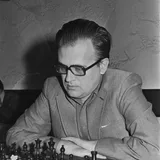 Bent Larsenas Black · In the repertoire
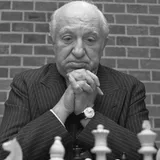 Miguel Najdorfas Black · In the repertoire
 Paul Morphyas Black · In the repertoire
Games in the Atlas
Lines below
- A80Dutch Defense: Alapin Variation
- A80Dutch Defense: Barcza Variation
- A80Dutch Defense: Hevendehl Gambit
- A80Dutch Defense: Hopton Attack
- A80Dutch Defense: Janzen-Korchnoi Gambit
- A80Dutch Defense: Kingfisher Gambit
- A80Dutch Defense: Korchnoi Attack
- A80Dutch Defense: Krejcik Gambit2 lines
- A80Dutch Defense: Omega-Isis Gambit
- A80Dutch Defense: Raphael Variation
- A80Dutch Defense: Senechaud Gambit
- A80Dutch Defense: Spielmann Gambit
- A81Dutch Defense: Blackburne Variation
- A81Dutch Defense: Fianchetto Attack
- A81Dutch Defense: Semi-Leningrad Variation
- A82Dutch Defense: Blackmar's Second Gambit
- A82Dutch Defense: Staunton Gambit8 lines
- A82Dutch Defense: Staunton Gambit Accepted
- A84Dutch Defense
- A84Dutch Defense: Bellon Gambit
- A84Dutch Defense: Bladel Variation
- A84Dutch Defense: Classical Variation13 lines
- A84Dutch Defense: Krause Variation
- A84Dutch Defense: Normal Variation
- A84Dutch Defense: Rubinstein Variation
- A85Dutch Defense: Queen's Knight Variation
- A86Dutch Defense: Fianchetto Variation
- A86Dutch Defense: Hort-Antoshin System
- A86Dutch Defense: Leningrad Variation5 lines
- A90Dutch Defense: Nimzo-Dutch Variation2 lines
- A92Dutch Defense: Alekhine Variation
- A92Dutch Defense: Stonewall Variation7 lines
- Dutch Defense: Leningrad
- Dutch Defense: Manhattan Gambit4 lines