
Openings
- Chess Atlas Subsections
- VOL. I • Chess HistoryFrom Chaturanga to Neural Engines
- VOL. II • Classic ChessPieces, Notation & Rules
- VOL. III • Legendary PlayersPantheon of Chess Immortals
- VOL. IV • Great GamesInteractive game studies
- VOL. V • OpeningsOriginal CAISSORA Opening Articles
- VOL. VI • Tactics & StrategyForks, Pins & Board Geometry
King's Pawn Game
The first move that opens most of the book
- Classical
1.e4 takes the centre, opens lines for the queen and the king's bishop and eyes d5 at once. The move itself has hardly any name of its own: everything depends on Black's reply, and from it grow the Sicilian, the French, the Caro–Kann, the Ruy Lopez and dozens of other openings. It is for players who want open play, quick development and tactics.
5…Be7
Moves
(10 plies • 5 moves)- 1–5moves
- 1.
- 2.
- 3.
- 4.
- 5.
Defining move
1.e4 — the pawn goes to the centre
The move that starts the widest tree of openings
The e4 pawn controls d5 and f5 and frees the diagonals of the queen and the king's bishop. In return it stands unprotected, and the squares d4 and f4 behind it are weakened. Black decides how to answer: with the mirror 1…e5, with the flank thrust 1…c5, or by giving White space, as in the French.
Tabiya
One possible outcome: the Ruy Lopez
This is only one branch among many, picked as an example. After 1…e5 White develops the knight to f3, and the bishop leans on the c6 knight, which guards the e5 pawn. White has castled and Black is getting ready to do the same. White wants to prepare d4 and cash in on better development; Black holds e5 and waits for a good moment for …b5 and …d6.
White’s plan
- Hold the centre with the e4 and d4 pawns, if Black allows.
- Develop the knights and bishops quickly and castle.
- Use the open lines for an attack on the king or pressure on weak points.
Black’s plan
- Contest the centre rather than hand it over: strike at it with a pawn (…e5, …c5, …d5) or with pieces.
- Finish development and castle without leaving weaknesses.
- Pick a reply to taste: symmetry, a counterattack or quiet defence.
Notable players
Bobby FischerLegends who played it
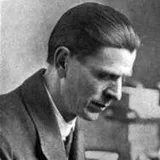
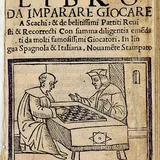
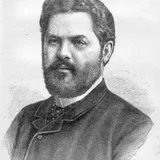
Games in the Atlas
No games in the Atlas yet
Lines below
- B07King's Pawn Game: Maróczy Defense
- C20King's Pawn Game
- C20King's Pawn Game: Alapin Opening
- C20King's Pawn Game: Bavarian Gambit
- C20King's Pawn Game: Beyer Gambit
- C20King's Pawn Game: King's Head Opening2 lines
- C20King's Pawn Game: Leonardis Variation
- C20King's Pawn Game: MacLeod Attack3 lines
- C20King's Pawn Game: Mengarini's Opening
- C20King's Pawn Game: Napoleon Attack
- C20King's Pawn Game: Philidor Gambit
- C20King's Pawn Game: Tortoise Opening
- C20King's Pawn Game: Wayward Queen Attack3 lines
- C20King's Pawn Game: Weber Gambit
- C40King's Pawn Game: Busch-Gass Gambit2 lines
- C40King's Pawn Game: Damiano Defense3 lines
- C40King's Pawn Game: Gunderam Gambit
- C40King's Pawn Game: La Bourdonnais Gambit
- C40King's Pawn Game: McConnell Defense
- C44King's Pawn Game: Dresden Opening
- C44King's Pawn Game: Pachman Wing Gambit
- C44King's Pawn Game: Schulze-Müller Gambit
- C44King's Pawn Game: Tayler Opening4 lines
- King's Pawn Game: Clam Variation2 lines
- King's Pawn Game: Gunderam Defense