
Openings
- Chess Atlas Subsections
- VOL. I • Chess HistoryFrom Chaturanga to Neural Engines
- VOL. II • Classic ChessPieces, Notation & Rules
- VOL. III • Legendary PlayersPantheon of Chess Immortals
- VOL. IV • Great GamesInteractive game studies
- VOL. V • OpeningsOriginal CAISSORA Opening Articles
- VOL. VI • Tactics & StrategyForks, Pins & Board Geometry
Alekhine Defense
Let the pawns run far from home
- Sharp play
- Big pawn centre
- Hypermodern
Black answers 1.e4 with a knight attack and invites White to chase it with pawns. With every move of e5, d4 and c4 White gains space, but the pawns drift further from home. Black counts on undermining that centre and striking at it with pieces. The defence pulls the opponent out of familiar patterns and suits players who like a sharp, lopsided fight.
8…Nb6
Moves
(16 plies • 8 moves)The knight goes to b6, hits c4 and keeps control of d5. White has built a centre on c4, d4 and e5, and Black now sets out to wear it down.
- 1–8moves
- 1.
- 2.
- 3.
- 4.
- 5.
- 6.
- 7.
- 8.
Defining move
1…Nf6 — the invitation to advance
The move that turns the Alekhine into a trap for overreaching
The knight on f6 blocks no white pawn; it simply hits e4. White can answer 2.Nc3 or 2.d3, but usually plays 2.e5 and chases the knight. Every move of the chase brings White closer to what Black wants: a broad centre that has to be defended.
Tabiya
The Modern system with 4.Nf3
White has three central pawns, on c4, d4 and e5, and plenty of space. Black has every piece developed, the bishop on h5 pins the knight and the b6 knight presses on c4. White wants to secure the centre without letting Black break through; here White often plays exd6 or Nc3. Black looks for the moment to strike with …dxe5 and …c5 and tries to show that White's centre is overstretched.
The centre
A big white pawn centre against piece strikesWhite's pawns on c4, d4 and e5 form a chain; Black has d6 and e6. White owns the space, but the pawns have few defenders. Black waits and aims at the base of the chain.
Key squaresd5e5d4
Outposts
- d5The black knight's outpost
- g4The bishop that pins the knight
Thematic breaks
- exd6White
The exd6 exchange
Remove the d6 pawn and ease the tension around e5 before it becomes dangerous.
What follows: Black recaptures with the c- or e-pawn and gets a mobile centre, while White keeps the space.
- c5Black
The …c5 strike
Strike at d4, the base of White's chain.
What follows: If d4 falls or is traded, the e5 pawn loses its support and White's centre collapses.
- dxe5Black
The …dxe5 exchange
Break up the chain and open lines for the pieces.
What follows: Open play suits Black: the pieces are ready, and White's centre becomes a target.
White’s plan
- Secure the space: c4, Nc3, sometimes exd6 to ease the tension.
- Develop and castle, without giving Black easy trades.
- Defend d4 and e5 and do not let Black wear the centre down.
Black’s plan
- Undermine the centre with …dxe5, …c5 and …d5.
- Trade the g4 bishop for the f3 knight and weaken the defence of d4 and e5.
- Develop and castle while White spends time on pawns.
History
The defence is named after Alexander Alekhine, who played it at the Budapest tournament of 1921. It soon became a matter of argument, but strong players took it seriously. Bobby Fischer played it against Boris Spassky in the 1972 match. One of its best-known games is Nigel Short's win over Jan Timman at Tilburg in 1991.
Famous games
Short – Timman, Tilburg 1991 (1991)Legends who played it
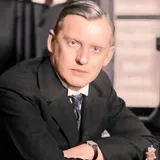 Alexander Alekhineas Black · Named after the player
Games in the Atlas
Lines below
- B02Alekhine Defense: Brooklyn Variation2 lines
- B02Alekhine Defense: Buckley Attack
- B02Alekhine Defense: Kmoch Variation
- B02Alekhine Defense: Krejcik Variation2 lines
- B02Alekhine Defense: Maróczy Variation
- B02Alekhine Defense: Mokele Mbembe3 lines
- B02Alekhine Defense: Normal Variation
- B02Alekhine Defense: Sämisch Attack
- B02Alekhine Defense: Scandinavian Variation3 lines
- B02Alekhine Defense: Spielmann Gambit
- B02Alekhine Defense: Steiner Variation
- B02Alekhine Defense: The Squirrel
- B02Alekhine Defense: Two Pawns Attack4 lines
- B02Alekhine Defense: Welling Variation
- B03Alekhine Defense
- B03Alekhine Defense
- B03Alekhine Defense
- B03Alekhine Defense: Balogh Variation
- B03Alekhine Defense: Exchange Variation3 lines
- B03Alekhine Defense: Four Pawns Attack8 lines
- B03Alekhine Defense: Hunt Variation4 lines
- B03Alekhine Defense: O'Sullivan Gambit
- B04Alekhine Defense: Modern Variation12 lines