
Openings
- Chess Atlas Subsections
- VOL. I • Chess HistoryFrom Chaturanga to Neural Engines
- VOL. II • Classic ChessPieces, Notation & Rules
- VOL. III • Legendary PlayersPantheon of Chess Immortals
- VOL. IV • Great GamesInteractive game studies
- VOL. V • OpeningsOriginal CAISSORA Opening Articles
- VOL. VI • Tactics & StrategyForks, Pins & Board Geometry
English Opening
A centre without central pawns
- Fianchetto
- Positional play
- Hypermodern
White starts from the flank: the c4 pawn aims at d5 without occupying the centre. The idea is to keep the centre at a distance and choose a convenient continuation after Black's reply. The English is flexible: it easily transposes into a Queen's Gambit, a Sicilian or a King's Indian. That is why it is not always pleasant to play against.
6…Nb6
Moves
(12 plies • 6 moves)The knight retreats, keeping the pieces: a complex positional struggle ahead.
- 1–6moves
- 1.
- 2.
- 3.
- 4.
- 5.
- 6.
Defining move
1.c4! — pressure from the wing
The move that makes the opening English
White does not rush to occupy the centre with pawns. The c4 pawn prepares pressure on d5 and leaves the choice open: after Black's reply White can build a centre, transpose to a Queen's Gambit or keep the position flexible. It is an opening for those who like to choose the structure as the game goes.
Tabiya
The Reversed Sicilian
The structure resembles the Sicilian with colours reversed: Black has the central e5 pawn, White an extra move. White presses along the long diagonal and the c-file and waits for the moment to strike with d2-d4. Black guards the centre and seeks counterplay, often with …f5.
The centre
A wing pawn controls the centreWhite has the c4 pawn and the d2 and e2 pawns still at home; Black has a central e5 pawn. The d4 square is weak for Black, and a white knight wants it.
Key squaresd5d4e5
Outposts
- d5The target square
- d4Black's hole
Thematic breaks
- d5Black
The …d7-d5 strike
Stop White from pressing with c4 and gain space of your own.
What follows: If White trades, Black gets development and White the long diagonal.
- d4White
The d2-d4 central break
Turn the pressure of pieces into a centre when Black is not ready.
What follows: The game transposes into a Queen's Gambit or a Sicilian, depending on the reply.
White’s plan
- Press on d5 and on the long diagonal g2–b7: g3, Bg2.
- Choose the structure: Queen's Gambit, Sicilian or King's Indian.
- Prepare d2-d4 once Black shows their hand.
Black’s plan
- Take the centre: …e5 or …d5.
- Play symmetrically (…c5) and transpose to Sicilian schemes.
- Do not let White get the centre without a fight.
History
The name comes from the Englishman Howard Staunton, who played 1.c4 in his match with Saint-Amant in 1843. His contemporaries were not impressed, and it was taken seriously only in the twentieth century: Botvinnik, Fischer, Kasparov, Karpov and Carlsen chose it in the most important games.
Legends who played it
 Mikhail Botvinnikas White · Named after the player
- Mikhail Botvinnikas White · Signature opening
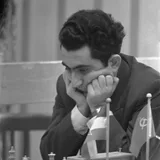 Tigran Petrosianas White · Signature opening
 Vasily Smyslovas White · Signature opening
 Viktor Korchnoias White · Signature opening
 Ding Lirenas White · In the repertoire
 Magnus Carlsenas White · In the repertoire
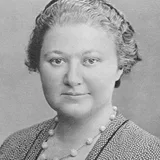 Vera Menchikas White · In the repertoire
Games in the Atlas
Lines below
- A10English Opening: Achilles-Omega Gambit
- A10English Opening: Adorjan Defense
- A10English Opening: Anglo-Dutch Defense2 lines
- A10English Opening: Anglo-Lithuanian Variation
- A10English Opening: Anglo-Scandinavian Defense4 lines
- A10English Opening: Great Snake Variation
- A10English Opening: Jaenisch Gambit
- A10English Opening: Myers Defense
- A10English Opening: Myers Gambit
- A10English Opening: Porcupine Variation
- A10English Opening: Wade Gambit
- A10English Opening: Zilbermints Gambit
- A11English Opening: Caro-Kann Defensive System
- A13English Opening: Agincourt Defense23 lines
- A13English Opening: Neo-Catalan
- A13English Opening: Neo-Catalan Declined
- A13English Opening: Romanishin Gambit
- A15English Opening: Anglo-Indian Defense25 lines
- A16English Opening: Anglo-Grünfeld Defense2 lines
- A18English Opening: Mikenas-Carls Variation3 lines
- A20English Opening: Drill Variation
- A20English Opening: King's English Variation53 lines
- A22English Opening: Carls-Bremen System
- A30English Opening: Symmetrical Variation35 lines
- A30English Opening: Wing Gambit
- C20English Opening: The Whale
- English Opening: Anglo-Dutch Variation2 lines
- English Opening: Closed2 lines
- English Opening: Four Knights System
- English Opening: King's English2 lines
- English Opening: Mikenas-Carls
- English Opening: Symmetrical