
Openings
- Chess Atlas Subsections
- VOL. I • Chess HistoryFrom Chaturanga to Neural Engines
- VOL. II • Classic ChessPieces, Notation & Rules
- VOL. III • Legendary PlayersPantheon of Chess Immortals
- VOL. IV • Great GamesInteractive game studies
- VOL. V • OpeningsOriginal CAISSORA Opening Articles
- VOL. VI • Tactics & StrategyForks, Pins & Board Geometry
Réti Opening
The centre from a distance
- Fianchetto
- Hypermodern
White begins with a knight move and strikes at the d5 pawn from the wing with c4, in no hurry to occupy the centre. White controls it from a distance: with bishops on long diagonals and blows at Black's pawns. Black may occupy the centre with pawns, but then those pawns come under pressure. The opening is very flexible and easily transposes into a Queen's Gambit Declined or a Catalan.
7…Nc6
Moves
(14 plies • 7 moves)The knight adds control of d4 and e5 and blocks the b2 bishop's diagonal.
- 1–7moves
- 1.
- 2.
- 3.
- 4.
- 5.
- 6.
- 7.
Defining move
2.c4 — a flank blow at d5
The move that turns 1.Nf3 into the Réti
The c4 pawn attacks d5, but White is not trying to win it. White wants Black to decide: trade the pawn, support it, or push it to d4, where it can be undermined later. White builds the centre with pieces and wing pawns. This is a hypermodern idea.
Tabiya
Two white bishops on the diagonals
This is the Réti in its most familiar form. White has no centre, but every piece is in place: the g2 bishop eyes d5 and the b2 bishop leans on the f6 knight. White wants to put a pawn on d4 at the right moment or strike with cxd5. Black watches d4 and e5 and looks for the moment to hit back in the centre.
The centre
A flank opening: the centre is controlled by piecesWhite has pawns on c4, b3 and g3: support on the wings and an empty centre. Black has pawns on e6 and d5, and c5 has joined them. Everything hinges on the d4 move: if White plays it, the game turns into a queen's gambit or a Catalan structure.
Key squaresd5d4e5
Outposts
- d5White's target
- g2White's bishop
Thematic breaks
- d4White
The d2-d4 advance
Take the centre with a pawn when the pieces are developed.
What follows: The game often turns into a Catalan or a queen's gambit.
- b4White
The b2-b4 expansion
Win space on the queenside and undermine Black's centre.
What follows: Black may fall behind in development if they dwell too long on the centre.
- c5Black
The …c7-c5 strike
Take control of d4 and widen the centre.
What follows: White loses the easy d4 and plays b3 and Bb2.
White’s plan
- Press on d5: the g2 bishop and the c4 pawn.
- Develop the queen's bishop to b2 or expand on the queenside with b2-b4.
- Occupy the centre with d4 at the right moment, or take on d5.
Black’s plan
- Lean on the d5 and e6 pawns and solidify the centre.
- Win space back with …c5 and take control of d4.
- Develop calmly and answer flank play with a blow in the centre.
History
The opening is named after Richard Réti, a Czechoslovak master and theorist of hypermodernism. At the New York tournament of 1924 Réti began with 1.Nf3 and beat the world champion Capablanca. Alekhine also used it in the 1920s.
Legends who played it
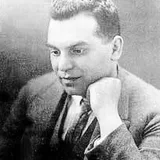 Richard Rétias White · Named after the player
Games in the Atlas
No games in the Atlas yet