
Openings
- Chess Atlas Subsections
- VOL. I • Chess HistoryFrom Chaturanga to Neural Engines
- VOL. II • Classic ChessPieces, Notation & Rules
- VOL. III • Legendary PlayersPantheon of Chess Immortals
- VOL. IV • Great GamesInteractive game studies
- VOL. V • OpeningsOriginal CAISSORA Opening Articles
- VOL. VI • Tactics & StrategyForks, Pins & Board Geometry
King's Indian Defense
Let White build the centre: it will become a target
- Fianchetto
- Sharp play
- Closed centre
- Hypermodern
Black lets White occupy the centre with d4, c4 and e4 while building up the g7 bishop and waiting. Then comes …e5, and the centre is under pressure. The position closes and the fight spreads to opposite wings: White goes on the queenside, Black on the kingside. That is why King's Indian games are so sharp: both sides play to win and risk losing.
8…Ne7
Moves
(16 plies • 8 moves)The knight heads for g6 and prepares …f5. The attack on the white king begins.
- 1–8moves
- 1.
- 2.
- 3.
- 4.
- 5.
- 6.
- 7.
- 8.
Defining move
6…e5! — a strike at the centre
The move that turns the waiting King's Indian setup into a fighting one
While Black merely waited, White built a centre. …e5 starts the pressure: the g7 bishop and the e5 pawn hit d4, and White must decide what to do with the centre. In the main system White closes it with d4-d5, and the battle moves to the wings.
Tabiya
The Mar del Plata position
The main position of the King's Indian. The centre is closed and both kings are safe. White advances on the queenside with c4-c5 and opened lines; Black goes on the kingside with …f5, …f4 and …g5. Since both plans are fast, a mistake is costly: the side one move ahead wins.
The centre
A closed centre and a wing raceThe d5 and e5 pawns lock the centre. White has the edge on the queenside (c4), Black on the kingside (f7, g6, h7).
Key squaresd5e5f4
Outposts
- g7The heart bishop
- f4The spearhead
Thematic breaks
- f5Black
The …f7-f5 strike
Open the f-file and launch the attack on the king.
What follows: If White is not ready, the king comes under fire from all of Black's pieces.
- c5White
The c4-c5 advance
Open the queenside and gain space.
What follows: Black has to answer fast: the race decides.
- b5Black
The …b7-b5 jab
Distract White from the attack and open a file on the queenside.
What follows: A backup plan when …f5 does not work.
White’s plan
- Play on the queenside: c4-c5, then b2-b4 and open lines.
- Guard the king against …f5: Ne1, Nd3, f2-f3.
- Do not let the g7 bishop break free.
Black’s plan
- Attack on the kingside: …f5, …f4, …g5.
- Use the g7 bishop once lines open.
- If needed, counterplay with …b5.
History
In the 1930s the King's Indian was thought dubious. Its reputation was restored by Soviet masters, above all David Bronstein, and then Tal, Fischer and Kasparov made it a favourite weapon. Today it is played by Nakamura and Radjabov.
Legends who played it
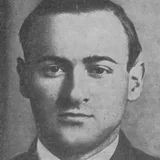
- OOscar Pannoas Black · Named after the player
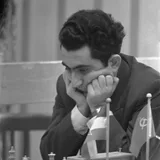


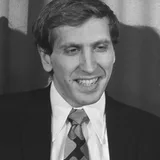 Bobby Fischeras Black · Signature opening
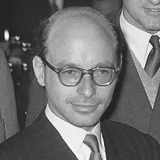 David Bronsteinas Black · Signature opening
 Garry Kasparovas Black · Signature opening
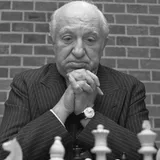 Miguel Najdorfas Black · Signature opening
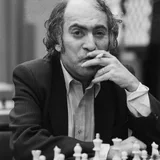 Mikhail Talas Black · Signature opening
- Tigran Petrosianwith both colours · Signature opening
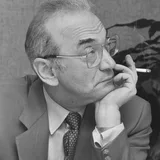 Viktor Korchnoias White · Signature opening
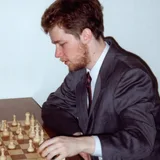 Alexander Khalifmanas Black · In the repertoire
 Ding Lirenas Black · In the repertoire
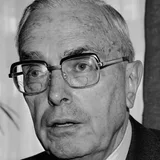 Max Euweas Black · In the repertoire
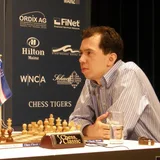 Rustam Kasimdzhanovas Black · In the repertoire
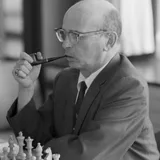 Samuel Reshevskywith both colours · In the repertoire
 Veselin Topalovas Black · In the repertoire
Games in the Atlas
Lines below
- E60King's Indian Defense: Fianchetto Variation27 lines
- E60King's Indian Defense: Santasiere Variation
- E61King's Indian Defense: Semi-Classical Variation5 lines
- E61King's Indian Defense: Smyslov Variation
- E70King's Indian Defense: Accelerated Averbakh Variation
- E70King's Indian Defense: Kramer Variation
- E70King's Indian Defense: Normal Variation6 lines
- E71King's Indian Defense: Karpov System
- E71King's Indian Defense: Makogonov Variation
- E72King's Indian Defense: Pomar System
- E73King's Indian Defense: Averbakh Variation11 lines
- E73King's Indian Defense: Semi-Averbakh System
- E76King's Indian Defense: Four Pawns Attack8 lines
- E77King's Indian Defense: Six Pawns Attack
- E80King's Indian Defense: Sämisch Variation18 lines
- E81King's Indian Defense: Steiner Attack4 lines
- E90King's Indian Defense: Larsen Variation
- E90King's Indian Defense: Zinnowitz Variation
- E91King's Indian Defense: Kazakh Variation
- E91King's Indian Defense: Orthodox Variation22 lines
- E92King's Indian Defense: Exchange Variation
- E92King's Indian Defense: Petrosian Variation4 lines