
Openings
- Chess Atlas Subsections
- VOL. I • Chess HistoryFrom Chaturanga to Neural Engines
- VOL. II • Classic ChessPieces, Notation & Rules
- VOL. III • Legendary PlayersPantheon of Chess Immortals
- VOL. IV • Great GamesInteractive game studies
- VOL. V • OpeningsOriginal CAISSORA Opening Articles
- VOL. VI • Tactics & StrategyForks, Pins & Board Geometry
Nimzo-Indian Defense
A pin instead of a centre
- Positional play
- Hypermodern
Black pins the c3 knight with the b4 bishop and stops White from playing e2-e4. The centre is controlled by pieces, not pawns. Often Black trades the bishop for the knight to double White's pawns on the c-file: in return White gets the bishop pair, and Black gets a solid position and targets. The defence is flexible, reliable and very precise: equality is within reach, but you have to know how.
7…Nc6
Moves
(14 plies • 7 moves)The knight aims at d4 too. A positional struggle begins: Black will trade the bishop for a knight, White will get the bishop pair.
- 1–7moves
- 1.
- 2.
- 3.
- 4.
- 5.
- 6.
- 7.
Defining move
3…Bb4! — the pin
The move that makes the defence Nimzo-Indian
The b4 bishop stops White from playing e2-e4 and also threatens to trade on c3, after which White's pawns are doubled. White must either tolerate the pin or pay with the pawn structure. The idea belongs to Aron Nimzowitsch.
Tabiya
The main position of the Rubinstein System
The classic Nimzo-Indian position. Black has a pawn on d5 and presses on d4 with the c5 pawn and the c6 knight. Next come …dxc4 and …Bxc3 doubling White's pawns. White gets the bishop pair, Black simple plans and targets.
The centre
A centre of pieces against a centre of pawnsWhite holds d4 and e3, Black d5 and c5. If the bishop takes on c3, White gets doubled c-pawns, but also the bishop pair.
Key squaresc3d4e4
Outposts
- c3The doubled target
- e4The key square
Thematic breaks
- c3Black
Trading the bishop for the knight
Double White's pawns and create targets.
What follows: White gets the bishop pair and wants an open position; Black wants a closed one.
- c5Black
The …c7-c5 strike
Press on d4 and open the c-file.
What follows: If White captures on c5, Black gets active pieces.
- e4White
The e3-e4 central advance
Relieve the b4 bishop's pressure and get free play.
What follows: If White gets e4 in, Black loses a key square and the position becomes harder.
White’s plan
- Keep the bishop pair and open the position.
- Develop and play e3-e4 or d4xc5.
- Defend the c3 and c4 pawns against pressure.
Black’s plan
- Control e4 and d5 so that White cannot take the centre.
- Trade the bishop for a knight and attack the weak pawns.
- Close the position: White's bishops lose their strength in a closed game.
History
The defence was brought into master practice by Aron Nimzowitsch. It first appeared in a world championship match in 1929, in the second game between Alekhine and Bogoljubov. Since then every world champion from Capablanca on has played it.
Famous games
Botvinnik – Capablanca, AVRO 1938 (1938)Legends who played it
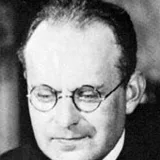 Aaron Nimzovichas Black · Named after the player
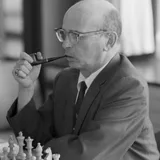
- V
- Akiba Rubinsteinas White · Signature opening
 Anatoly Karpovas Black · Signature opening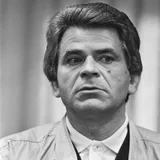
 Hou Yifanas Black · Signature opening
 Mikhail Botvinnikas Black · Signature opening
- Samuel Reshevskyas White · Signature opening
 Vasily Smyslovas Black · Signature opening
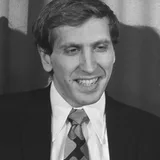 Bobby Fischeras Black · In the repertoire
 Garry Kasparovwith both colours · In the repertoire
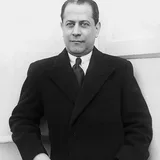 José Raúl Capablancaas Black · In the repertoire
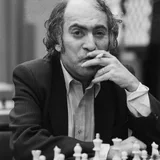 Mikhail Talas Black · In the repertoire
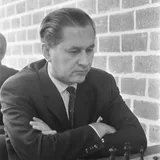 Paul Keresas Black · In the repertoire
 Ruslan Ponomariovas Black · In the repertoire
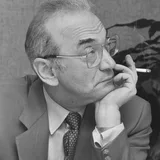 Viktor Korchnoias Black · In the repertoire
 Vladimir Kramnikas Black · In the repertoire
Games in the Atlas
Lines below
- E20Nimzo-Indian Defense: Dilworth Gambit
- E20Nimzo-Indian Defense: Kmoch Variation
- E20Nimzo-Indian Defense: Mikenas Attack
- E20Nimzo-Indian Defense: Romanishin Variation3 lines
- E21Nimzo-Indian Defense: Three Knights Variation4 lines
- E22Nimzo-Indian Defense: Spielmann Variation5 lines
- E24Nimzo-Indian Defense: Sämisch Variation11 lines
- E30Nimzo-Indian Defense: Leningrad Variation3 lines
- E32Nimzo-Indian Defense: Classical Variation20 lines
- E40Nimzo-Indian Defense: Rubinstein System8 lines
- E43Nimzo-Indian Defense: St. Petersburg Variation16 lines
- E46Nimzo-Indian Defense: Normal Variation20 lines
- E46Nimzo-Indian Defense: Reshevsky Variation
- E46Nimzo-Indian Defense: Simagin Variation
- E48Nimzo-Indian Defense: Ragozin Defense
- E50Nimzo-Indian Defense
- E51Nimzo-Indian Defense: Ragozin Variation