
Openings
- Chess Atlas Subsections
- VOL. I • Chess HistoryFrom Chaturanga to Neural Engines
- VOL. II • Classic ChessPieces, Notation & Rules
- VOL. III • Legendary PlayersPantheon of Chess Immortals
- VOL. IV • Great GamesInteractive game studies
- VOL. V • OpeningsOriginal CAISSORA Opening Articles
- VOL. VI • Tactics & StrategyForks, Pins & Board Geometry
Grünfeld Defense
Give up the centre, then take it apart
- Sharp play
- Big pawn centre
- Hypermodern
Grünfeld's idea looks paradoxical: Black lets White build a powerful pawn centre and then attacks it from every side. The g7 bishop, the c5 pawn and the c6 knight all hit d4, and White must prove the centre is a strength rather than a target. It is one of the sharpest answers to 1.d4, with hardly a quiet position in sight.
6…Bg7
Moves
(12 plies • 6 moves)The bishop lands on the long diagonal, aiming straight at c3 and d4. The battle can begin.
- 1–6moves
- 1.
- 2.
- 3.
- 4.
- 5.
- 6.
Defining move
3…d5! — a challenge to the centre
The move that turns an Indian defence into the Grünfeld
In the King's Indian Black plays …d6 and lets White occupy the centre in peace. Here the pawn goes to d5 at once and offers an exchange. White will get a broad centre, but will have to defend it against pressure that starts within a couple of moves.
Tabiya
The Exchange Variation tabiya
The main position of the Grünfeld. White has pawns on c3, d4 and e4 and room for the pieces; Black has no centre pawns at all, but the g7 bishop sweeps the whole diagonal down to a1. Next Black plays …c5 and brings a knight to c6, putting White's centre in a crossfire. White usually answers with 7.Bc4 or 7.Nf3.
The centre
Pawn centre against a piece siegeWhite holds the c3–d4–e4 chain. Black's pawns are all on the wings, and Black's whole game is pressure on d4.
Key squaresd4c5g7
Outposts
- d4The main target
- c5The lever
- g7The long-range bishop
Thematic breaks
- c5Black
The …c7-c5 strike
Attack d4 and throw open the g7 bishop's diagonal.
What follows: After the exchanges Black often keeps an extra queenside pawn — a trump for the endgame.
- d5White
The d4-d5 advance
Take space and cut the g7 bishop off from the queenside.
What follows: A strong or passed pawn on d5 — or a new target, depending on White's precision.
- e5Black
The …e7-e5 break
A second way to hit the centre when …c5 is not possible.
What follows: The centre opens, and the better-developed side wins out.
White’s plan
- Hold d4 and e4 and finish development calmly: Bc4 or Be3, Ne2 or Nf3.
- When possible, push d4-d5 and grab space.
- Use the central majority to attack the king.
Black’s plan
- Press on d4 with …c5, …Nc6, …Bg4 and …Qa5.
- Trade the centre pawns and head for an endgame with a queenside majority.
- Look after the g7 bishop — it is the heart of the whole system.
History
The Austrian master Ernst Grünfeld brought the defence into tournament play in 1922. At first it looked too risky, but the strongest players soon took to it. Vasily Smyslov made it his weapon, a thirteen-year-old Bobby Fischer played the 'Game of the Century' with it against Donald Byrne, and Garry Kasparov used it in his world championship matches against Anatoly Karpov.
Famous games
The Game of the Century (1956)The Grünfeld Defense begins 1.d4 Nf6 2.c4 g6 3.Nc3 d5, and is named after Austrian grandmaster Ernst Grünfeld, who introduced it at Bad Pistyan in 1922, drawing Friedrich Sämisch and defeating Alexander Alekhine with it in the same year (an earlier instance was played in 1855 in Calcutta by Moheschunder Bannerjee). It is a hallmark of hypermodern strategy: Black willingly lets White build a broad pawn center with c4-d4-e4, then attacks that center from the flanks with pieces rather than occupying it directly, treating a large center as a potential target rather than an asset. The defense has been a mainstay of world-class chess for a century, carried by Vasily Smyslov, Viktor Korchnoi, and Bobby Fischer, who reached it in his celebrated 1956 win over Donald Byrne and again against Boris Spassky in their 1972 World Championship match; Garry Kasparov relied on it repeatedly in his own world title matches through the 1980s and 1990s, and it remains a top-level choice for players such as Magnus Carlsen and Viswanathan Anand today.
Legends who played it
- EErnst Grünfeldas Black · Named after the player
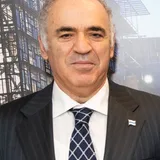 Garry Kasparovas Black · Signature opening
- Vasily Smyslovas Black · Signature opening
 Alexander Khalifmanas Black · In the repertoire
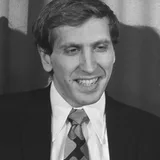 Bobby Fischeras Black · In the repertoire