Openings
- Chess Atlas Subsections
- VOL. I • Chess HistoryFrom Chaturanga to Neural Engines
- VOL. II • Classic ChessPieces, Notation & Rules
- VOL. III • Legendary PlayersPantheon of Chess Immortals
- VOL. IV • Great GamesInteractive game studies
- VOL. V • OpeningsOriginal CAISSORA Opening Articles
- VOL. VI • Tactics & StrategyForks, Pins & Board Geometry
King's Gambit
A pawn for speed
- Gambits
- Sharp play
- Open centre
- Classical
The King's Gambit begins 1.e4 e5 2.f4, one of the oldest recorded chess openings, appearing in Luis Ramírez de Lucena's 1497 treatise and later analyzed by the 16th-century Spanish priest Ruy López de Segura.
5.Ne5
Moves
(9 plies • 5 moves)The knight leaps to the centre, and the sharpest fight begins. This is the Kieseritzky Gambit.
- 1–5moves
- 1.
- 2.
- 3.
- 4.
- 5.
Defining move
2.f4! — a challenge to the centre
The move that turns the game into a gambit
Instead of a quiet Nf3, White attacks the e5 pawn at once with f4. If Black takes, White gets the centre and an open f-file for the attack. If Black declines, Black must find counterplay. This move defined the whole Romantic era of chess.
Tabiya
The Kieseritzky Gambit
The white knight stands on e5, while Black keeps an extra pawn and has stretched the kingside with g4 and f4. White gave material for fast pieces. Black has the extra pawn, but the king is in danger. Next White plays d2-d4 and Bc4, Black …Nf6 and …d6.
The centre
The open f-file against an extra pawnWhite has no f-pawn; Black has an extra pawn on f4. The centre is free, and the better-developed side wins.
Key squaresf7e5f4
Outposts
- f7The main target
- e5The knight's leap
Thematic breaks
- d4White
The d2-d4 strike
Take the centre while Black clings to the f4 pawn.
What follows: If Black is slow to develop, a quick attack follows.
- c4White
The bishop swing to c4
Aim at f7, the weakest square in Black's camp.
What follows: Black must defend f7 instead of developing.
- d5Black
The …d7-d5 counterstrike
Give the pawn back and take the centre. This is the idea of the Falkbeer Countergambit.
What follows: Black gets easy play and White loses time.
White’s plan
- Win the pawn back or not, but develop quickly: d2-d4, Bc4, castling.
- Keep the f-file open and aim at f7.
- Do not let Black finish development in peace.
Black’s plan
- Keep the pawn without letting White attack: …g5, …g4, …Nf6.
- Take the centre: …d6, …d5.
- Return the material at the right moment and switch to defence.
History
The most famous game in the King's Gambit is the Immortal Game: in London in 1851 Adolf Anderssen sacrificed almost all his pieces against Kieseritzky and won. A century later Boris Spassky came back to the gambit: he played it at the top level and beat David Bronstein with it in 1960.
The King's Gambit begins 1.e4 e5 2.f4, one of the oldest recorded chess openings, appearing in Luis Ramírez de Lucena's 1497 treatise and later analyzed by the 16th-century Spanish priest Ruy López de Segura. White offers the f4 pawn to open the f-file and seize the center, trading long-term structural risk for rapid development and attacking chances against Black's king. It defined the aggressive Romantic era of the 19th century, when Howard Staunton's 1847 handbook devoted nearly a third of its opening coverage to it, before falling out of favor at the top level after Wilhelm Steinitz challenged its soundness and Bobby Fischer's 1961 essay 'A Bust to the King's Gambit' argued that 3...d6 refutes it outright. The Bishop's Gambit, 1.e4 e5 2.f4 exf4 3.Bc4, is one of its sharpest branches: White delays recapturing the pawn to eye f7 immediately, accepting an early loss of castling rights after 3...Qh4+ 4.Kf1 in exchange for fast piece activity. Despite its decline among elite players, the King's Gambit remains a favorite at club level and in rapid chess for the sharp, forcing positions it produces from the very first moves.
Legends who played it
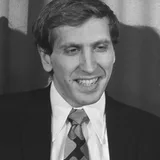
- E
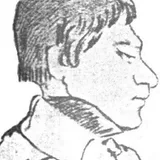
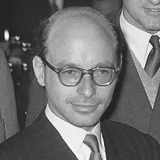 David Bronsteinas White · Signature opening
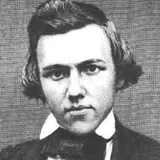 Paul Morphyas White · Signature opening
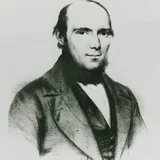 Adolf Anderssenas White · In the repertoire
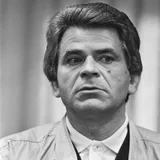 Boris Spasskyas White · In the repertoire