
Openings
- Chess Atlas Subsections
- VOL. I • Chess HistoryFrom Chaturanga to Neural Engines
- VOL. II • Classic ChessPieces, Notation & Rules
- VOL. III • Legendary PlayersPantheon of Chess Immortals
- VOL. IV • Great GamesInteractive game studies
- VOL. V • OpeningsOriginal CAISSORA Opening Articles
- VOL. VI • Tactics & StrategyForks, Pins & Board Geometry
Bogo-Indian Defense
A bishop check that sidesteps the big theory
- Solid
After 3.Nf3 White has steered clear of the Nimzo-Indian, and Black answers with a bishop check instead of waiting for Nc3. White has to decide how to block. Black gets easy development and a fight for the centre with pieces rather than pawns. People choose it for calm strategic play without heavy theory.
7…Ne4
Moves
(14 plies • 7 moves)- 1–7moves
- 1.
- 2.
- 3.
- 4.
- 5.
- 6.
- 7.
Defining move
3…Bb4+ — the check before the knight reaches c3
The move that defines the defence
White's knight is on f3, not c3, so the bishop must go to b4 right away. White has to answer with Bd2, Nbd2 or Nc3. The last move leads into the Nimzo-Indian, which players who chose 3.Nf3 usually prefer to avoid.
Tabiya
The Nimzowitsch line: 4.Bd2 Qe7
Black has traded the bishop for the knight on c3, White recaptured with the bishop, and the f6 knight has jumped to e4. White has the bishop pair and some extra space; Black has a solid position and active pieces. Rc1 usually follows, then …O-O and …d6. The position is considered equal, but the play stays lively.
White’s plan
- Fianchetto the bishop to g2 and keep space with the d4 and c4 pawns.
- Use the bishop on c3 and prepare the d5 break.
- Keep the bishop pair and play on the space advantage.
Black’s plan
- Trade the bishop on c3 or d2 and so ease the pressure on the centre.
- Put a knight on e4 and support it with …d6.
- Castle and play …e5 once White's centre loosens.
History
The defence is named after Efim Bogoljubow.
Legends who played it
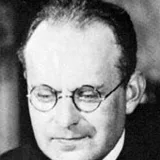
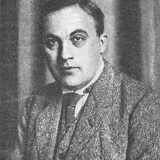 Efim Bogoljubovas Black · Named after the player
- E
Games in the Atlas
No games in the Atlas yet
Lines below
- E11Bogo-Indian Defense: Exchange Variation
- E11Bogo-Indian Defense: Grünfeld Variation
- E11Bogo-Indian Defense: Haiti Variation
- E11Bogo-Indian Defense: Monticelli Trap
- E11Bogo-Indian Defense: New England Variation
- E11Bogo-Indian Defense: Nimzowitsch Variation
- E11Bogo-Indian Defense: Retreat Variation12 lines
- E11Bogo-Indian Defense: Vitolins Variation
- E11Bogo-Indian Defense: Wade-Smyslov Variation