
Openings
- Chess Atlas Subsections
- VOL. I • Chess HistoryFrom Chaturanga to Neural Engines
- VOL. II • Classic ChessPieces, Notation & Rules
- VOL. III • Legendary PlayersPantheon of Chess Immortals
- VOL. IV • Great GamesInteractive game studies
- VOL. V • OpeningsOriginal CAISSORA Opening Articles
- VOL. VI • Tactics & StrategyForks, Pins & Board Geometry
Four Knights Game
Four knights, no hurry
- Solid
- Classical
- Symmetry
Both sides bring out two knights and only then turn to the bishops. Every piece stands on a natural square, and the pawns are protected. From there the game can go quietly, like a Spanish, or sharply, with a d4 strike. The opening suits those who want a sound position without long memorisation and with room for either side to choose.
8…Qe7
Moves
(16 plies • 8 moves)The queen guards the f6 knight and prepares …Nd8-e6 to escape the pin.
- 1–8moves
- 1.
- 2.
- 3.
- 4.
- 5.
- 6.
- 7.
- 8.
Defining move
3…Nf6 — the fourth knight
The move that gives the opening its name and its character
Black looks for activity neither with a pawn nor with a bishop, but simply copies his opponent. All the knights eye the centre, and White has no direct threat. The next question is where the bishop goes: b5, as in the Spanish, or c4, as in the Italian. Or White can strike with the d4 pawn.
Tabiya
The Spanish Four Knights
Black has traded the b4 bishop for the c3 knight, so White has the bishop pair but doubled c-pawns. The g5 bishop pins the f6 knight, and the c6 knight is still pinned by the b5 bishop. Black wants to keep the position closed so that White's bishops have no open diagonals, and to reroute the c6 knight to e6. White wants to open the game with d4 and give the bishops room. Both sides have grounds for a counterstrike on the kingside.
The centre
A closed centre against the bishop pairThe e4 and e5 pawns face each other, backed by d3 and d6. After the recapture on c3, White's pawns on c2 and c3 are doubled, but the b-file is open for a rook. Black's structure is intact.
Key squaresd4e5f5
Outposts
- e6Black's knight
- g5White's bishop
Thematic breaks
- d4White
The d3-d4 strike
Open the game so the bishops get diagonals.
What follows: If Black is not ready, the bishops quickly dominate. If he is, the open game weakens White too.
- Ne6Black
The …Nd8-e6 manoeuvre
Escape the pin and attack the g5 bishop.
What follows: White must decide what to do with the bishop: retreat or trade it for the f6 knight.
- f5Black
The …f7-f5 counterstrike
Create a threat on the kingside and open the game where White is weaker.
What follows: White must watch the centre, and the d4 plan is delayed.
White’s plan
- Prepare d4 with Re1 and Qd2 or Qf3 to open diagonals for the bishops.
- Keep the bishop pair and do not let Black close the game.
- Maintain the pins on the f6 and c6 knights.
Black’s plan
- Keep the position closed so that White's bishops have nothing to do.
- Reroute the c6 knight to e6 via d8 and escape the pin.
- Look for the …f5 counterstrike on the kingside.
History
The opening was played as early as the nineteenth century: at the first American chess congress in 1857, Paul Morphy beat Louis Paulsen in a Four Knights game. The reply 4…Nd4 bears the name of Akiba Rubinstein. In recent decades strong grandmasters have come back to the opening.
Legends who played it
- VVladimir Alatortsevas Black · Named after the player
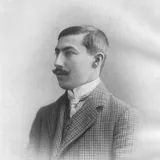 Akiba Rubinsteinas Black · Signature opening
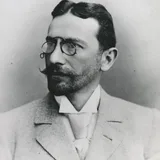 Siegbert Tarraschas White · In the repertoire
Games in the Atlas
Lines below
- C47Four Knights Game: Glek System2 lines
- C47Four Knights Game: Gunsberg Variation2 lines
- C47Four Knights Game: Halloween Gambit3 lines
- C47Four Knights Game: Italian Variation3 lines
- C47Four Knights Game: Naroditsky Variation
- C47Four Knights Game: Scotch Variation7 lines
- C47Four Knights Game: Scotch Variation Accepted2 lines
- C48Four Knights Game: Spanish Variation28 lines