
Openings
- Chess Atlas Subsections
- VOL. I • Chess HistoryFrom Chaturanga to Neural Engines
- VOL. II • Classic ChessPieces, Notation & Rules
- VOL. III • Legendary PlayersPantheon of Chess Immortals
- VOL. IV • Great GamesInteractive game studies
- VOL. V • OpeningsOriginal CAISSORA Opening Articles
- VOL. VI • Tactics & StrategyForks, Pins & Board Geometry
Italian Game
A quiet game with a hidden threat
- Open centre
- Classical
The c4 bishop looks at the weakest square in Black's camp: the f7 pawn. White develops quickly, castles and prepares d4. The name Giuoco Piano means the quiet game: at first everything is calm, but a strike can come at any moment. Today slow systems with d2-d3 are more popular, where precise manoeuvres matter more than attack.
7.Bb3
Moves
(13 plies • 7 moves)The bishop retreats in advance, so …b5 gains nothing. A manoeuvring game without hurry begins.
- 1–7moves
- 1.
- 2.
- 3.
- 4.
- 5.
- 6.
- 7.
Defining move
3.Bc4! — the bishop on f7
The move that makes the game Italian
The bishop takes the a2–g8 diagonal and presses on f7, Black's one weakness at this stage. It asks Black no questions, as the bishop on b5 does, but simply helps development. That is why the Italian Game is regarded as one of the easiest open games to understand.
Tabiya
The Giuoco Pianissimo tabiya
The modern Italian Game. The d3 and c3 pawns give White a reliable centre, and the b3 bishop keeps up the pressure. The game is unhurried: White regroups to prepare d2-d4, Black waits for the blow and guards the structure. The side with the more precise manoeuvres wins.
The centre
A calm centre with moves in handWhite has pawns on c3, d3 and e4, Black on d6 and e5. The centre is closed, but each side keeps a break in reserve: d3-d4 for White, …d5 for Black.
Key squaresf7d4d5
Outposts
- f7The weakest square
- d5The pivot square
Thematic breaks
- d4White
The d3-d4 break
Open the centre and expose Black's king.
What follows: After the exchange on d4 White gets an open file, and Black must watch the f7 square.
- d5Black
The …d6-d5 strike
Relieve the pressure on f7 and free the game.
What follows: If it works, Black equalises and the Italian becomes a quiet game.
White’s plan
- Finish development calmly: castling, Nbd2, Re1.
- Prepare d3-d4 and strike at the centre.
- Keep the bishop on the a2–g8 diagonal and press on f7.
Black’s plan
- Guard the f7 pawn and keep the e5–d6 chain solid.
- Prepare the …d5 strike and relieve the pressure.
- Do not let White trade bishops on good terms.
History
It is one of the oldest openings: it was analysed by the Italians Damiano and Polerio in the sixteenth century and by Greco in the seventeenth. The name Giuoco Piano means the quiet game. In the Romantic era the Evans Gambit was fashionable, and Morphy played it. In the twentieth century the Ruy Lopez nearly pushed the Italian aside, but from the 1980s the quiet system with d2-d3 returned: Karpov played it in his 1981 match, and today Giri and Vachier-Lagrave play it regularly.
Legends who played it
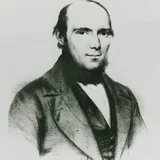
- GGiulio Cesare Polerioas Black · Named after the player
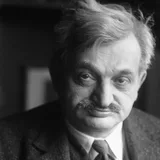
- M
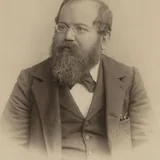
- W

Games in the Atlas
Lines below
- C50Italian Game: Anti-Fried Liver Defense
- C50Italian Game: Blackburne-Kostić Gambit
- C50Italian Game: Deutz Gambit
- C50Italian Game: Giuoco Pianissimo9 lines
- C50Italian Game: Giuoco Piano10 lines
- C50Italian Game: Hungarian Defense2 lines
- C50Italian Game: Jerome Gambit
- C50Italian Game: Paris Defense
- C50Italian Game: Rosentreter Gambit
- C50Italian Game: Rousseau Gambit
- C51Italian Game: Evans Gambit41 lines
- C51Italian Game: Evans Gambit Accepted
- C51Italian Game: Evans Gambit Declined9 lines
- C53Italian Game: Bird's Attack
- C53Italian Game: Classical Variation45 lines
- C55Italian Game: Two Knights Defense46 lines
- C56Italian Game: Scotch Gambit14 lines
- C56Italian Game: Scotch Invitation Declined