
Openings
- Chess Atlas Subsections
- VOL. I • Chess HistoryFrom Chaturanga to Neural Engines
- VOL. II • Classic ChessPieces, Notation & Rules
- VOL. III • Legendary PlayersPantheon of Chess Immortals
- VOL. IV • Great GamesInteractive game studies
- VOL. V • OpeningsOriginal CAISSORA Opening Articles
- VOL. VI • Tactics & StrategyForks, Pins & Board Geometry
Slav Defense
A pawn on c6, a bishop at large
- Solid
Black defends the d5 pawn with a pawn on c6 rather than on e6, as in the Queen's Gambit Declined. That keeps the c8 bishop from being locked in, and it gets out beyond the pawn chain before Black closes the diagonal. The price is a temporary surrender of the centre: the d5 pawn often takes on c4 and leaves. People choose the Slav when they want a sturdy position without a passive bishop and without wild risks.
8…Nbd7
Moves
(16 plies • 8 moves)The d7 knight covers e5 and supports the f6 knight, so that …Bg6 and castling become possible.
- 1–8moves
- 1.
- 2.
- 3.
- 4.
- 5.
- 6.
- 7.
- 8.
Defining move
2…c6 — a pawn instead of …e6
The move that sets the Slav apart from the Queen's Gambit Declined
The c6 pawn holds d5 as firmly as …e6 would, but does not lock in the c8 bishop. The bishop can go to f5 or g4 before Black closes the diagonal. After …dxc4 Black's structure also stays whole: the pawns on c6 and e6 still guard d5. For this Black is ready to let White have some space for a while.
Tabiya
The main line with 5.a4
White has the pawn back: pawns on d4 and e3, a bishop on c4 eyeing e6, and a4 on the queenside. Black has brought the bishop outside, pinned the c3 knight and is about to play …Bg6, …O-O and perhaps …e5. White wants e3-e4 for a big centre; Black wants to step in on time and trade it off. The position is balanced, but full of move-order subtleties.
The centre
White's pressure on the centre against Black's supportWhite has pawns on d4 and e3, and the c-pawn is gone. Black has c6 and e6, and no d-pawn either. The centre turns on two moves: White wants e4, Black wants …e5 or …c5.
Key squarese4c4e5
Outposts
- e4The central square
- c4White's bishop
Thematic breaks
- e4White
The e3-e4 advance
Take the centre and chase the f5 bishop off its diagonal.
What follows: If Black has not played …Bg6 in time, he loses time or the bishop. If he has, the e4 pawn becomes a target.
- e5Black
The …e6-e5 break
Trade off White's d4 pawn and open the game for the bishops.
What follows: Black equalises and gets easy play, though the open lines may help White too.
- c5Black
The …c6-c5 strike
Attack d4 and remove White's pawn from the centre.
What follows: The d4 pawn is weakened, but Black's position opens as well, so it takes accurate calculation.
White’s plan
- Play e3-e4 and build a big centre.
- Use the c4 bishop and a4 to keep Black from …b5.
- Castle, put the queen on e2 and wait for a slip in move order.
Black’s plan
- Retreat the bishop to g6 before White gets in e4.
- Castle and prepare the …e5 or …c5 strike.
- Trade the f8 bishop for the c3 knight or keep the pin if it is awkward for White.
History
The defence is called the Slav because its theory was worked out mostly by masters of Slavic origin; Semyon Alapin was one of the first. It got a serious test in the world championship matches between Alekhine and Euwe in 1935 and 1937, where both players used it many times. Euwe did a lot for the theory of the open lines with 4…dxc4.
Legends who played it
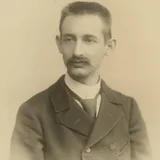
- G
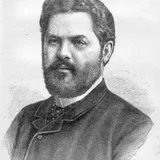

 Max Euweas Black · Signature opening
- Vasily Smyslovas Black · Signature opening
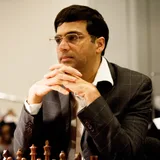 Viswanathan Anandas Black · Signature opening
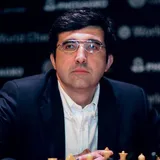 Vladimir Kramnikas Black · Signature opening
 Alexander Khalifmanas Black · In the repertoire
Games in the Atlas
No games in the Atlas yet
Lines below
- D10Slav Defense
- D10Slav Defense
- D10Slav Defense: Diemer Gambit
- D10Slav Defense: Exchange Variation6 lines
- D10Slav Defense: Winawer Countergambit2 lines
- D11Slav Defense: Bonet Gambit
- D11Slav Defense: Breyer Variation
- D11Slav Defense: Modern Line4 lines
- D11Slav Defense: Quiet Variation6 lines
- D15Slav Defense: Alekhine Variation
- D15Slav Defense: Chebanenko Variation3 lines
- D15Slav Defense: Geller Gambit2 lines
- D15Slav Defense: Schlechter Variation
- D15Slav Defense: Süchting Variation
- D15Slav Defense: Three Knights Variation
- D15Slav Defense: Two Knights Attack
- D16Slav Defense: Alapin Variation
- D16Slav Defense: Smyslov Variation
- D16Slav Defense: Soultanbeieff Variation
- D16Slav Defense: Steiner Variation
- D17Slav Defense: Czech Variation13 lines
- Slav Defense: Slav Gambit