
Openings
- Chess Atlas Subsections
- VOL. I • Chess HistoryFrom Chaturanga to Neural Engines
- VOL. II • Classic ChessPieces, Notation & Rules
- VOL. III • Legendary PlayersPantheon of Chess Immortals
- VOL. IV • Great GamesInteractive game studies
- VOL. V • OpeningsOriginal CAISSORA Opening Articles
- VOL. VI • Tactics & StrategyForks, Pins & Board Geometry
Tarrasch Defense
A weak pawn for free pieces
- Sharp play
- Isolated pawn
In the Queen's Gambit Black answers 3…c5 and hits the centre at once. He accepts an isolated pawn on d5 and gets active bishops and easy development in return. White will press on that pawn, and Black will play with his pieces. The defence is considered sound, but it demands accuracy and good knowledge of theory.
7…Be7
Moves
(14 plies • 7 moves)- 1–7moves
- 1.
- 2.
- 3.
- 4.
- 5.
- 6.
- 7.
Defining move
3…c5 — a blow at the centre
The move that sets the Tarrasch apart from the other Queen's Gambit Declined set-ups
The c5 pawn hits d4 at once, and Black spends no time on passive defence. The price is an isolated pawn on d5 after the exchanges. In return both bishops get open diagonals, and Black has chances of counterplay.
Tabiya
The classical set-up with g3
White has put a bishop on g2 and aims at d5. After castling he can take on c5 and leave the d5 pawn without neighbours. Black gets bishops with open lines and plays for activity. If his pieces are lively, the weakness of the pawn matters little. If not, the endgame will be hard.
White’s plan
- Press on d5 with the g2 bishop and the pieces.
- Take on c5 and leave d5 isolated.
- As pieces come off, head for an endgame against the weak pawn.
Black’s plan
- Develop quickly and castle.
- Use the open bishop diagonals, especially after …Bb4 or …Be6.
- Seek active play before d5 turns into a target.
History
The defence is named after Siegbert Tarrasch. He championed it warmly: in his book Die moderne Schachpartie he marked it with an exclamation mark, while criticising the other Queen's Gambit set-ups.
Notable players
Siegbert TarraschLegends who played it
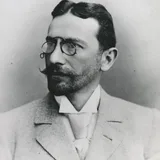 Siegbert Tarraschas Black · Named after the player
Lines below
- D32Tarrasch Defense: Grünfeld Gambit
- D32Tarrasch Defense: Marshall Gambit
- D32Tarrasch Defense: Schara Gambit
- D32Tarrasch Defense: Symmetrical Variation2 lines
- D32Tarrasch Defense: Tarrasch Gambit
- D32Tarrasch Defense: Two Knights Variation
- D32Tarrasch Defense: von Hennig Gambit
- D33Tarrasch Defense: Dubov Tarrasch
- D33Tarrasch Defense: Prague Variation2 lines
- D33Tarrasch Defense: Rubinstein System
- D33Tarrasch Defense: Swedish Variation2 lines
- D33Tarrasch Defense: Wagner Variation
- D34Tarrasch Defense: Classical Variation11 lines